

The gaming world is buzzing with excitement as AMD unveils its much-anticipated FSR Redstone update. This release brings significant advancements in upscaling and rendering technologies, promising to enhance gaming experiences across various titles. With features like FSR Upscaling, FSR Frame Gen, FSR Ray Regeneration, and the intriguing FSR Radiance Caching, AMD aims to push the boundaries of visual fidelity and performance.
Unveiling FSR Redstone’s Cutting-Edge Features
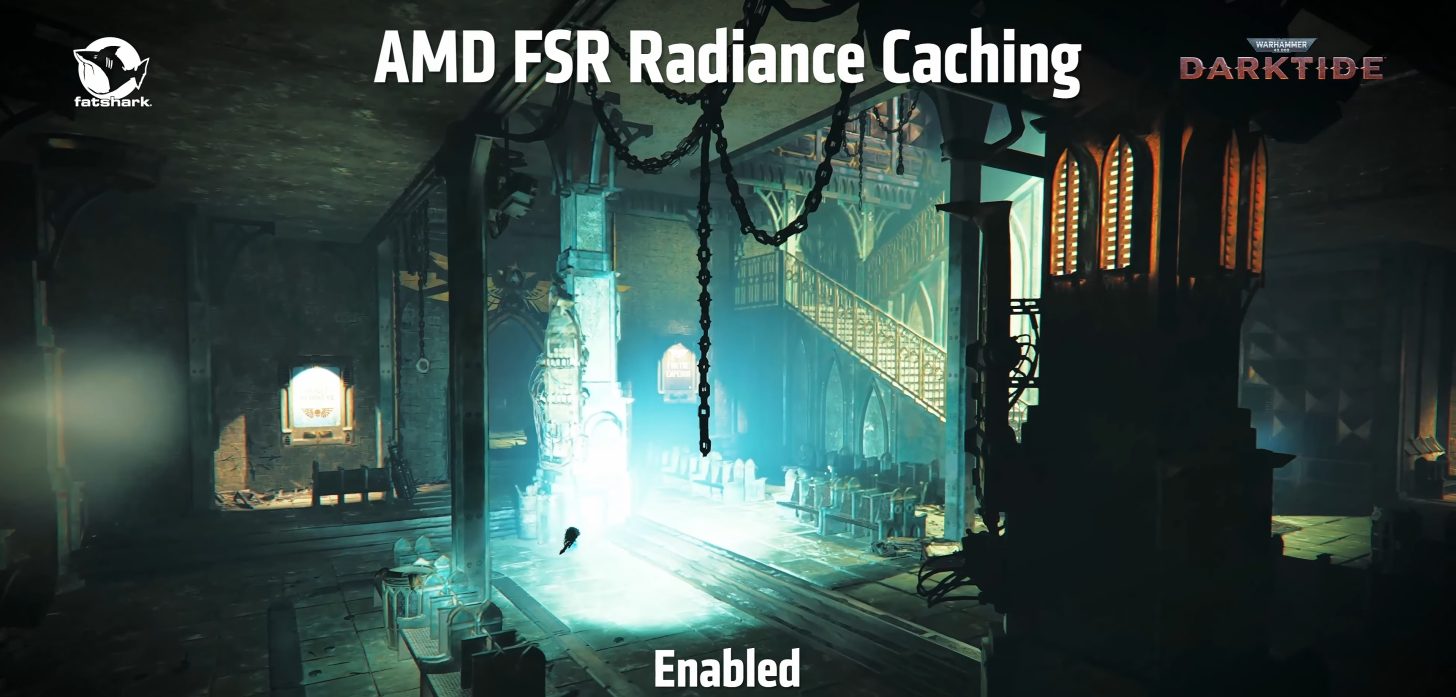
Among the highlights, Ray Regeneration stands out as a machine learning-powered denoiser that restores details in ray-traced effects, particularly in upscaled scenes. This technology, already introduced by Call of Duty: Black Ops 7, is AMD’s answer to NVIDIA’s DLSS Ray Reconstruction. Meanwhile, FSR Radiance Caching is still in its experimental phase. Although showcased in a tech demo for Warhammer 40K Darktide, the developers clarified that it’s not ready for live implementation due to the need for further development and testing.
Collaborative Innovations and Industry Impact
Fatshark, the studio behind Darktide, expressed enthusiasm for collaborating with AMD on the tech demo. Their Chief Technology Officer, Mikael Hansson, highlighted the value of partnerships in driving innovation and strengthening the gaming industry. The FSR Redstone SDK further details FSR Radiance Caching as an advanced illumination cache, utilizing online machine learning to enhance real-time global illumination without pre-computation.

Industry Comparisons and Future Prospects
This technology draws parallels to NVIDIA’s RTX Neural Radiance Cache, designed to accelerate path tracing through AI by simulating multiple light bounces. Released at CES 2025, NVIDIA’s solution is currently available only in Portal with RTX. Both companies are continually pushing the envelope in rendering technology, setting the stage for more immersive gaming experiences.
The gaming world is buzzing with excitement as AMD unveils its much-anticipated FSR Redstone update.