

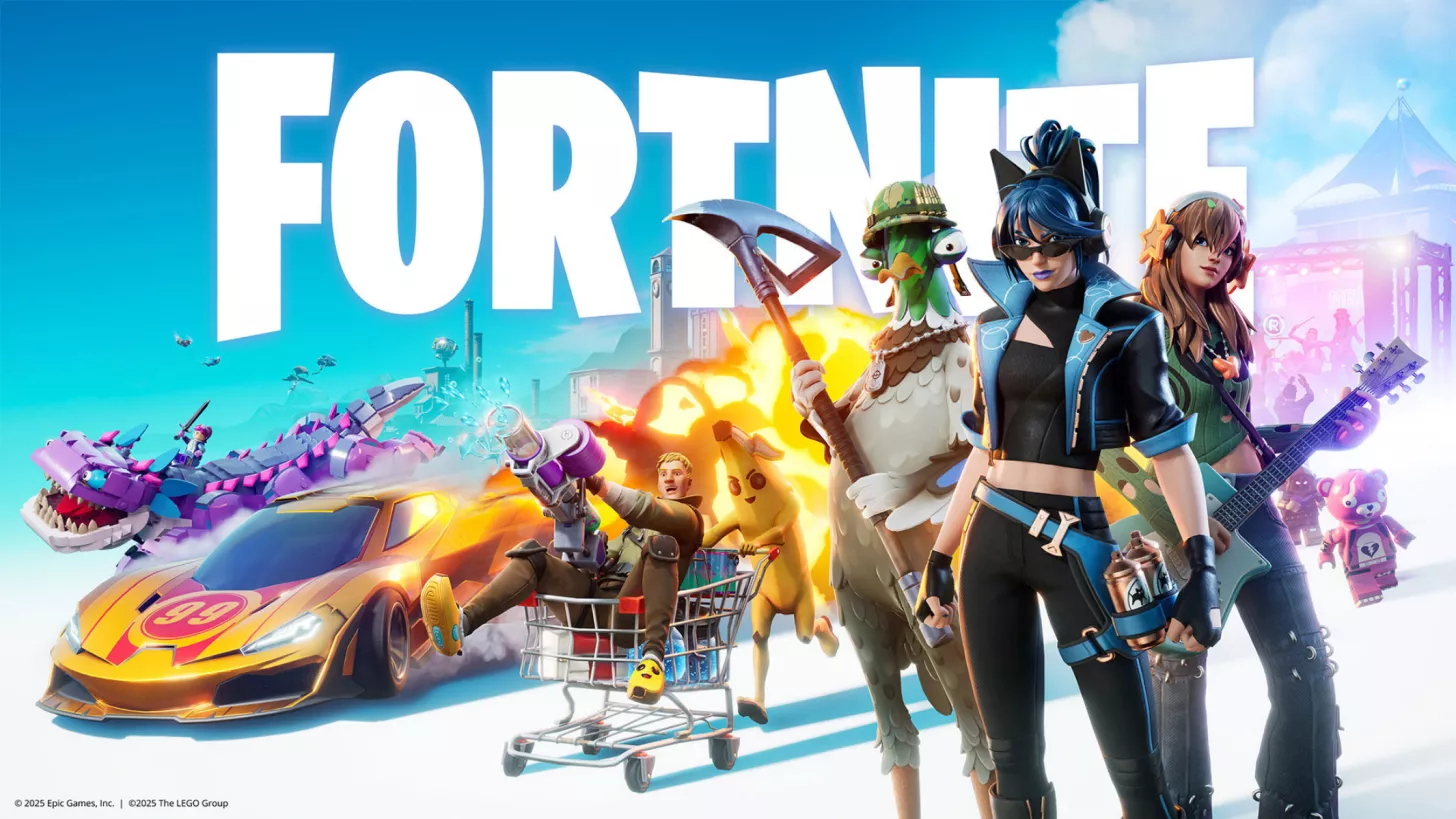
Since its inception in July 2017, Fortnite by Epic Games has become a game-changer in the video game industry. Initially, few could predict the seismic shift it would cause, but the release of its battle royale mode in September 2017 marked the beginning of an enduring legacy.
Now, in 2025, Fortnite stands as a unique phenomenon in gaming culture. Let’s delve into the evolution and current state of this iconic platform.
Release Date, Platforms, Pricing
The journey of Fortnite began on July 21, 2017, with the battle royale mode hitting the scene on September 12, 2017. A pioneer in the free-to-play model, Fortnite monetizes through in-game purchases using V-Bucks. Available on a wide range of platforms, from PC and Mac to all current-generation consoles and mobile devices, Fortnite offers unparalleled accessibility, making it playable on virtually any device despite its hardware.
Players can purchase V-Bucks in various bundles, with pricing as follows:
- 1,000 V-Bucks=$8.99 USD
- 2,800 V-Bucks=$22.99 USD
- 5,000 V-Bucks=$36.99 USD
- 13,500 V-Bucks=$89.99 USD
These V-Bucks are used for acquiring in-game skins, battle passes, and premium content. The purchasing model often requires players to buy more V-Bucks than needed, leaving them with a surplus.
Genre, Setting, and Story Premise
Fortnite transcends traditional game genres. With Fortnite Creative mode and diverse Fortnite Islands, the game can be anything from a shooter to a platformer. However, its core remains a third-person battle royale, where players build structures and manage their arsenal in a quest to outlast opponents.
The narrative traces back to the creation of an island by the fictional IO company, connecting various realities and setting the stage for countless crossover events. From Chapter 1 through Chapter 7, the storyline has grown, but the essence of a battle royale set in a reality-bridging island endures.
Every Chapter and Season in Fortnite so far
The expansive timeline of Fortnite features multiple chapters and seasons, each bringing fresh content and collaborations. Noteworthy is Chapter 7, introducing innovations like Storm Surfing and self-revives on the new Golden Coast map, alongside collaborations with iconic filmmakers.
Gameplay
Fortnite’s gameplay offers a dynamic experience, blending various genres due to the customization possible within Fortnite Islands. At its heart, the battle royale mode challenges players to scavenge, build, and fight to be the last one standing.
Tech and Specs
Technologically, Fortnite is accessible, playable on almost any device through cloud services. However, players with advanced hardware can leverage features like ray tracing and NVIDIA DLSS for enhanced graphics. Here are the official specs for Windows:
| Component | Minimum | Recommended | Recommended – Epic Quality Preset |
| OS | Windows 10 64-bit version 1703 | Windows 10/11 64-Bit | Windows 10/11 64-Bit |
| CPU | Core i3-3225 3.3 GHz | Core i5-7300U 3.5 GHz / AMD Ryzen 3 3300U | Intel Core i7-8700 / AMD Ryzen 7 3700x |
| RAM | 8GB | 16GB or higher, 8GB of VRAM or higher | 16GB or higher, 8GB of VRAM or higher |
| GPU | Intel HD 4000 / AMD Radeon Vega 8 | NVIDIA GTX 960 / AMD R9 280 or equivalent DX11 GPU | NVIDIA RTX 3070 / AMD Radeon RX 6700 XT |
| Storage | 100+ GB available (SSD strongly recommended) | 100+ GB available SSD | 100+ GB available SSD |
For Android, Fortnite requires a 64-bit ARM64 processor, Android OS 10.0, 4GB RAM, and specific GPUs. On iOS, devices need at least 4GB RAM and iOS 17.6.1, with compatibility from the iPhone 11 onwards.
Fortnite remains a cultural and gaming juggernaut, continuously evolving through new seasons and collaborations, captivating a diverse audience worldwide.