

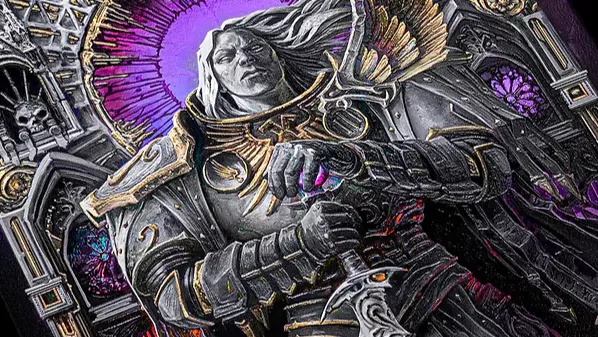
A recent controversy has put a spotlight on Displate, a popular marketplace known for collectible metal posters. Warhammer 40,000 fans raised concerns when they suspected that a piece of official artwork depicting Fulgrim, a significant character in the Warhammer universe, might have been produced using generative AI. However, Displate has firmly denied these allegations, attributing the “red flags” to human error instead.
Fans’ Concerns Over AI Usage
The uproar began when fans observed unusual elements in the $149 3D-printed Fulgrim Limited Edition artwork. Fulgrim, a key figure in the Warhammer 40,000 storyline, especially during The Horus Heresy, recently made a return as the Daemon Primarch of Chaos god Slaanesh. A well-known Warhammer 40,000 YouTuber, Luetin, prompted further investigation by highlighting discrepancies in the artwork. He noted that some parts of the image appeared misaligned, suggesting potential AI involvement.
Luetin clarified his concerns were speculative, yet he decided to remove promotional content related to the artwork until an official statement was made. This caution mirrored the sentiments of many in the Warhammer community, who prefer traditional artistry over AI-generated images.
Displate’s Response to the Allegations
After the issue gained traction online, Displate responded, denying any AI involvement in the artwork’s creation. According to a representative on the Displate subreddit, the artwork was crafted by one of their top in-house artists for their licensed Warhammer project. The perceived AI artifacts were attributed to an oversight in the final production stages. Displate assured that all their artworks, especially Limited Editions, are created by human artists and adhere to rigorous quality standards.
The company expressed regret over the oversight and thanked the community for holding creators to high standards. Customers with existing orders can request a replacement. Future shipments will include corrected artwork, set to arrive post-New Year.
The Broader Context of AI in Art
The use of generative AI in artistic domains is a hot-button issue across various industries. This week alone saw significant discussions surrounding this topic. For instance, the game Clair Obscur: Expedition 33 faced backlash after being stripped of a Game of the Year title due to AI usage allegations. Similarly, Larian, the studio behind Baldur’s Gate 3, is addressing community concerns regarding AI in game development.
Image credit: Games Workshop.