

Complete Guide to Minecraft Mobs: Animals, Monsters and Creatures
With each new update, Minecraft’s world becomes more populated with various creatures. From helpful animals to dangerous monsters, the survival game now features an impressive array of mobs that can be tamed, bred, ridden, or fought. Most of these entities are affected by the same game mechanics as players—they can be killed, drowned, or even catch fire. This comprehensive guide covers all mobs currently in the game as of May 2025.
Complete Guide to Passive Mobs
The Allay
The Allay was introduced during The Wild Update, appearing as a small, blue, fairy-like creature. These helpful mobs can be found imprisoned in cages at Pillager Outposts or Woodland Mansions. Breaking their cage frees them, and they’ll become loyal as gratitude for their rescue. Give an Allay an item to carry, and it will follow you, making it simple to lead back to your base. It will also seek out more of the same item and return it to you.
After an Allay becomes loyal, you cannot harm them even accidentally, though they can lose health from attacks by other mobs. If injured, they can regenerate their health independently. Breeding Allays differs from most mobs—they can self-duplicate without a partner by using an amethyst shard on an Allay while it’s dancing to jukebox music.
The Armadillo
The armadillo was added to Minecraft in April 2024 following the Minecraft Live mob vote. These creatures spawn in groups of two or three in Savanna and Badlands biomes. They curl up defensively if approached too quickly, so sneaking is recommended when getting close. Spiders fear armadillos, making them useful base protectors.
While armadillos cannot be tamed, they can be bred using spider eyes. They periodically drop scutes, or you can harvest them by using a brush. These scutes are valuable for crafting wolf armor—six scutes make one set.
The Axolotl
Minecraft axolotls can only be found in Lush Caves—large openings in deep caves that are often located beneath jungle biomes due to the humidity. Searching for an Azalea tree on the surface can indicate a Lush Cave below. Axolotls spawn within five blocks of clay, making this a key indicator when hunting for them.
You can collect axolotls in buckets before creating a proper habitat at your base. Since they can’t be tamed, released axolotls will swim away if not contained. They require water at least two blocks deep and can be bred using buckets of tropical fish.
Axolotls come in multiple colors: leucitic, wild, gold, cyan, and the extremely rare blue variant. Blue axolotls cannot be found naturally and must be bred. These creatures will attack most aquatic mobs except frogs, turtles, dolphins, and other axolotls.
The Bat
Bats spawn in groups of eight in dark areas below block layer 63. They don’t drop any items or experience points when killed, making their only notable characteristic their tendency to startle players with screeching and swooping while exploring caves. When idle, bats hang upside down from solid blocks but fly away when approached. The same happens if their hanging block is broken. Bats cannot be tamed, bred, or interacted with in any meaningful way—they simply exist in the game world.
The Bee
Minecraft bees are valuable for honey production. They generally mind their own business unless provoked, and like their real-world counterparts, they die after stinging. When harvesting honey from hives, keeping a campfire handy is wise as it keeps the bees calm during collection.
The Camel
Camels are relatively rare mobs found in deserts and desert villages. Unlike most mounts, they can be ridden by up to two players simultaneously. Since camels don’t respawn if killed, securing one with a saddle quickly upon discovery is advisable. Finding two camels and feeding them cacti causes them to breed, which is recommended given their scarcity.
Camels have an extra inventory slot for storing their saddle. They can spring normally, and saddled camels can dash and charge. A dash charge meter fills while riding and can be activated with the jump button.
Due to their height, camel riders cannot be reached by zombies, vindicators, hoglins, silverfish, endermites, and piglins. Most hostile mobs never attack camels, making them excellent for nighttime travel.
The Cat
Cats serve a practical purpose by warding off Creepers and Phantoms, which fear them. They can be found in villages or swamp huts and tamed using raw cod or raw salmon. Cats often bring morning gifts to their owners if not commanded to sit, assuming you slept in a bed at night and not during a thunderstorm.
The Chicken
Chickens spawn naturally in most overworld biomes, identifiable by the eggs they lay for collection. They make distinctive clucking sounds that can alert players to their presence. Killing chickens yields feathers and raw chicken meat. Their eggs can be thrown on the ground with a small chance of spawning another chicken.
To tame and breed chickens, any type of seed works. Notably, chickens are among the few mobs immune to fall damage. They come in three variants—temperate, cold, and warm—each exclusive to specific biomes.
The Cod
This passive aquatic mob resembles its real-life namesake. Cod can be found swimming in ocean biomes, particularly in cold or lukewarm waters. When killed, they drop raw cod used for taming cats or as food when cooked.
Cod can be caught with fishing rods or collected in buckets, allowing transport from oceans to custom aquariums or fish tanks. They cannot be tamed or bred.
The Cow
Minecraft cows come in three biome-specific variants: temperate, cold, and warm. They drop raw beef, which becomes steak when cooked—a valuable food source especially early in the game. They occasionally drop leather, essential for crafting books, item frames, and other recipes.
Using a bucket on a cow provides unlimited milk, which proves helpful for removing status effects like poison. Wheat is used to tame and breed cows.
The Dolphin
Dolphins can guide players to valuable loot and locations. They spawn in non-frozen oceans, and swimming near them grants the Dolphin’s Grace effect, significantly increasing swimming speed. Feeding a dolphin raw cod or salmon prompts it to swim toward the nearest buried treasure or ocean ruins.
Like their real-world counterparts, dolphins can leap from the water. Dropping items into water near dolphins triggers them to chase after the items. They cannot be tamed or bred and require water to survive—trapping them on land will cause their death.
Creating an underwater tunnel to guide dolphins into an enclosed water space at your base is a viable way to keep them nearby. Sailing boats near dolphins produces interesting interactions.
The Donkey
Donkeys behave similarly to horses but with one crucial difference—they can carry items. Found in plains or savanna biomes, they can be ridden once tamed, which involves repeatedly mounting them until they accept the player.
Donkeys can be equipped with chests, providing up to 15 additional inventory slots—ideal for transporting valuables across long distances. While they accept saddles, they cannot wear horse armor. Golden apples or golden carrots are used for breeding donkeys, and breeding one with a horse produces a mule.
The Fox
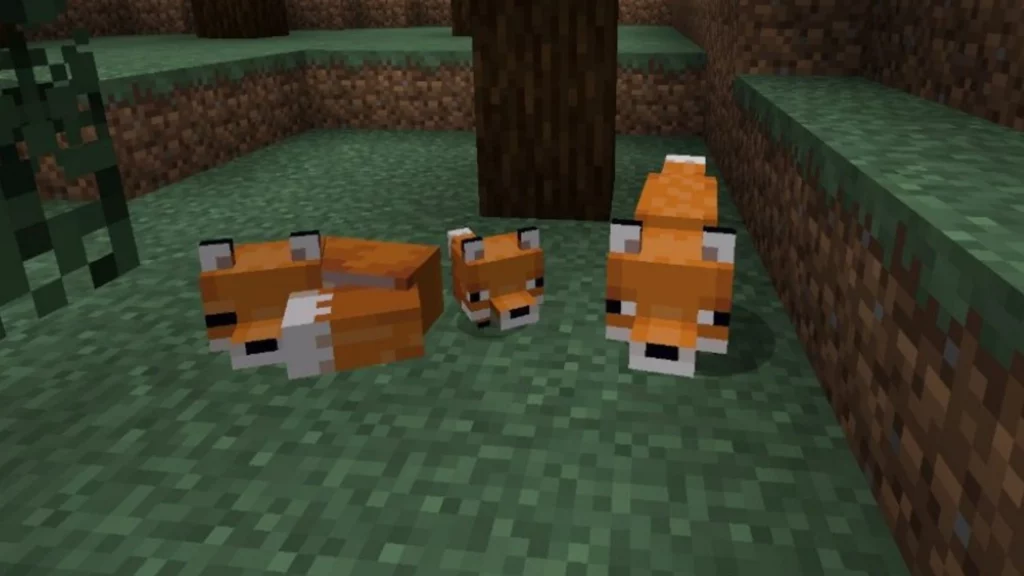
Foxes are among Minecraft’s most charming mobs. They typically spawn in taiga biomes in small groups and come in red or white varieties depending on the biome. They’re naturally skittish and will flee unless approached while sneaking.
Foxes can carry items in their mouths, including weapons and food, which they might use or eat. Sweet berries are used for breeding foxes, and offspring born from two player-bred foxes will trust the player and not run away. At night, foxes hunt chickens, rabbits, and small mobs, and will attack creatures holding food.
The Frog
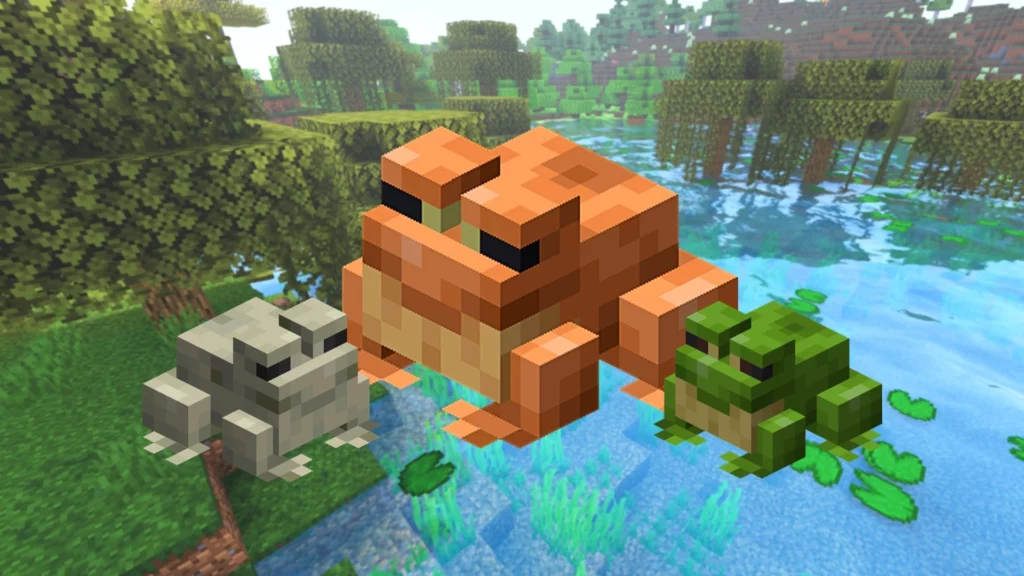
Frogs only spawn in swamp or mangrove swamp biomes and come in three color variants—temperate, warm, and cold. They can jump exceptionally high and feed on slimes and magma cubes. When a frog consumes a slime, it drops a slimeball; eating a magma cube creates a froglight—a decorative block matching the frog’s color variant.
Frogs are tamed and bred using slimeballs. Rather than laying eggs, they create frogspawn that hatches into tadpoles, which eventually develop into frogs.
The Goat
Goats inhabit mountain biomes, often precariously positioned on cliffs. They can jump up to ten blocks high, and when threatened, they charge and knock back players or other mobs. If a goat rams into a solid block, there’s a small chance it will drop a goat horn, usable for playing various sounds.
The “screaming goat” variant is known to bleat more aggressively and ram with greater force. Goats can be bred with wheat but don’t drop meat or leather when killed.
The Glow Squid
Glow Squids, like regular squids, are passive aquatic mobs. They spawn in dark underwater areas but are easily spotted due to their subtle glow. When killed, they drop glow ink sacs used for crafting glow item frames, which make contained items stand out in darkness.
Combining glow ink sacs with dye allows creation of glowing text on signs. Unlike regular squids, Glow Squids don’t shoot ink or flee from nearby players.
The Happy Ghast
The Happy Ghast is a passive alternative to the hostile Ghast mob. These adorable creatures wear harnesses and can transport items between locations in a hot air balloon-style configuration. They can carry up to three friends and remain stationary when players stand on their back, facilitating high-altitude construction.
The Horse
Horses spawn in plains or savanna biomes and can be tamed, ridden, and bred. Taming a horse requires repeatedly attempting to mount it until acceptance. They feature a wide variety of colors not restricted to specific biomes like other mob variants.
Horses can wear armor for additional protection. Golden apples or golden carrots are used for breeding, and offspring inherit specific traits from parents, such as movement speed or health. When killed, horses drop leather and occasionally saddles or horse armor. Breeding a horse with a donkey creates a mule capable of carrying chests.
The Iron Golem
Iron Golems protect Minecraft villages and remain passive until provoked. They serve as defenders during raids or hostile mob attacks thanks to their high health and powerful attacks. When killed, they drop iron ingots and sometimes flowers if they originated in a village.
To craft an Iron Golem, arrange four iron blocks in a T-shape topped with a pumpkin for the head.
The Llama
Llamas inhabit mountain and savanna biomes but are frequently seen accompanying Wandering Merchants. They can carry items in chests, providing up to 15 additional inventory slots. Llamas can form caravans, allowing control of multiple llamas simultaneously.
Once tamed through repeated mounting attempts, llamas can be ridden. When provoked, they spit as an attack mechanism. Breeding requires two tamed llamas fed with hay bales. Like horses, baby llamas inherit parental traits such as strength or speed.
The Mooshroom
The Mooshroom is a special cow variant found exclusively in mushroom islands—rare biomes identifiable by their mushroom-shaped trees. These distinctive creatures resemble red and white cows with mushrooms growing on their backs, though brown variants also exist.
They can be milked normally, but they also produce mushroom stew. Wheat is used for breeding Mooshrooms. When struck by lightning, Mooshrooms may transform into normal cows, and vice versa. If fed mushroom stew, a Mooshroom will consume it but return it to the player’s inventory. Their infinite mushroom stew capability makes them an excellent food source, though the rarity of their biome makes them difficult to locate.
The Mule
Mules result from breeding horses with donkeys. They inherit the donkey’s ability to carry chests but move faster. Mules cannot breed with each other, so creating more requires breeding additional horses with donkeys. They need saddles to be ridden.
Since mules are player-created and don’t spawn naturally, they’re automatically tamed upon birth.
The Ocelot
Ocelots differ from cats and spawn exclusively in jungles. Like cats and foxes, they flee when approached unless the player sneaks. Ocelots cannot be truly tamed, but players can earn their trust by offering raw cod or salmon.
In Java Edition, ocelots may be hostile, but feeding them raw cod reduces this hostility and their tendency to flee. Ocelots don’t take fall damage, and both creepers and phantoms fear them. Breeding ocelots with raw cod or salmon produces kittens that move faster than adults.
The Panda
Pandas spawn naturally in bamboo jungles and come in various personality types rather than color variants: normal, lazy, playful, worried, and aggressive. The only color variant is the brown panda. These personalities affect the pandas’ behavior.
Bamboo is used to tame and breed pandas, with offspring inheriting traits from both parents. Occasionally, when a panda sneezes, a baby panda is spontaneously born. Pandas drop bamboo when killed.
The Parrot
Minecraft parrots are known for their love of dancing—placing a music disc in a jukebox near a parrot makes it boogie! These colorful birds spawn naturally in jungle biomes. When tamed, parrots perch on the player’s shoulder. Any type of seed can be used for taming and breeding.
Parrots can mimic sounds of other mobs, such as creepers or zombies, typically when these threats are nearby. This ability provides an early warning system for attentive players.
The Pig
Pigs commonly serve as food sources, dropping raw pork when killed, which becomes nutritious pork chops when cooked. They appear in most overworld biomes in three biome-specific variants.
Pigs accept saddles for riding, though they move slower than horses. A carrot on a stick controls their direction. Carrots or potatoes are used for taming and breeding.
The Polar Bear
Polar bears spawn in snowy biomes and begin as neutral mobs. They often appear as an adult with a cub, which requires caution—adult polar bears become aggressive when players approach or threaten their cubs. Their melee attacks deal substantial damage, making protective parent bears dangerous.
When killed, polar bears drop raw cod or salmon. They cannot be tamed or bred.
The Pufferfish
Pufferfish inhabit warm oceans, particularly near coral reefs. These small, spiky creatures inflate when approached, causing poison damage and knockback effects. They appear in three states—small, medium, and fully puffed—with damage increasing at each inflation stage.
Pufferfish drop raw pufferfish when killed. While edible, consumption causes poison and hunger effects. They’re more valuable in brewing water-breathing potions. Players can collect pufferfish in water buckets for transportation to aquariums or fish tanks.
Though pufferfish don’t actively attack other mobs, they can inadvertently poison them by inflating nearby.
The Rabbit
Rabbits spawn across many biomes but are most common in flower forests and taigas. These quick-hopping creatures come in various colors. Carrots, golden carrots, or dandelions can breed rabbits to produce offspring.
When killed, rabbits drop raw rabbit meat (which can be cooked), rabbit hide, and occasionally a rabbit’s foot—essential for certain potions. Their usefulness in potion-making often makes them hunting targets.
The Salmon
Similar to cod, salmon spawn in rivers and oceans, typically appearing in small schools mimicking real life. When killed, they drop raw salmon for cooking and consumption. If killed while burning or with flame-enchanted weapons, they drop pre-cooked salmon.
Salmon can be caught using fishing rods or collected live in water buckets for aquarium display.
The Sheep
Sheep are often among the first mobs hunted by players since their wool is needed for crafting beds. They appear in three biome-dependent variants. Shears maximize wool collection, and dedicated players sometimes build sheep-shearing farms.
Wheat tames and breeds sheep. Offspring inherit their parents’ colors or a blend if the parents were dyed differently. Applying dye to white sheep changes their color. When killed, sheep drop raw mutton for cooking and eating.
The Sniffer
The sniffer is a less common mob introduced following a Minecraft Live vote. These ancient creatures don’t spawn naturally but hatch from sniffer eggs found in suspicious sand at warm ocean ruins.
Sniffers breed with torchflower seeds rather than traditional methods. They search for torchflower seeds or pitcher pods, repeating this process every eight minutes while avoiding the last 20 blocks they explored.
The Squid
These passive aquatic mobs inhabit rivers and overworld oceans. They swim peacefully and don’t attack other creatures. When approached by players, they may panic and squirt ink before attempting to escape.
Squids drop ink sacs when killed—crucial components for black dye and the book and quill item. While they can’t be tamed or bred, they serve well in dye farms or aquarium displays.
The Strider
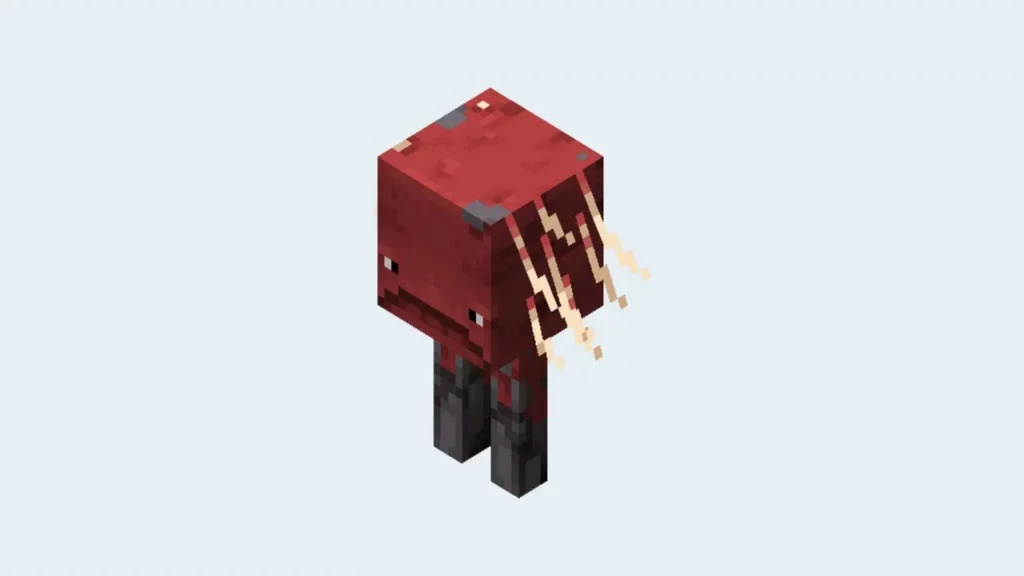
The Strider is the only passive mob native to the Nether, typically found on lava lakes. Players can ride them safely across lava, as Striders take no damage from it.
On land, Striders visibly shiver, indicating discomfort away from lava. Riding requires a saddle, with movement controlled using warped fungus on a stick. Warped fungus also breeds Striders. Players can transport Striders to the overworld using leads, but they should be kept in warm, dry environments—never near snow.
The Tropical Fish
Tropical fish spawn in oceans, particularly warm waters near coral reefs. The game features nearly 3,000 variants differing in color combinations, patterns, and body shapes.
Players can collect live tropical fish in buckets for elaborate aquariums. When killed, they drop raw tropical fish used for taming axolotls. Their nutritional value is too low to justify cooking or eating.
The Turtle
Turtles typically spawn on sand near warm oceans but occasionally appear on any sandy beach. They move slowly on land but swim rapidly.
After breeding with seagrass, turtles return to their hatching beach to lay eggs. Players can collect and relocate these eggs, as hatched turtles will remain at that location. Turtle eggs take notoriously long to hatch and can be trampled by players or mobs, requiring protection.
The Villager
Villagers are humanoid passive mobs exclusive to villages. They offer trading opportunities with distinct professions determining available goods and services—blacksmiths, librarians, farmers, and others provide valuable items exchangeable for emeralds.
Breeding villagers requires bread, carrots, potatoes, or beetroot, producing baby villagers if sufficient beds exist in the village. Through trading, villagers level up to offer improved items and enchantments. During raids, villagers demonstrate poor combat abilities, preferring to flee.
The Wandering Trader
The Wandering Trader occasionally appears across the map with two llamas. This nomadic merchant offers various goods for emeralds, often including otherwise unavailable items.
Their inventory randomizes with each appearance, with no way to influence offered goods. Unlike villagers, Wandering Traders cannot be bred or employed. They peacefully depart if not engaged, but both the trader and llamas become hostile if attacked.
The Wolf
Often called Minecraft’s dog, wolves spawn in forests, taigas, and snowy biomes, typically in packs. Bones can tame them, causing them to follow the player. Commands include sitting, standing, or attacking targets.
Wolves defend players even without commands, making them valuable companions in single-player survival. Bones also breed wolves. Feeding cooked meat heals injured wolves. Tail position indicates health status—raised tails signify wellness, while drooping tails suggest injury requiring food.
Hostile Mobs in Minecraft
While many passive mobs can be invited to bases for food, functionality, or aesthetic appeal, numerous hostile mobs emerge after sunset to challenge players.
The Blaze
Blazes inhabit Nether fortresses and drop Blaze Rods when defeated. As the sole source of these rods—essential for reaching The End and completing the game—encountering them becomes inevitable for progression.
They attack by spitting fireballs from a distance or spinning their rods during close combat. Immune to fire and lava damage, Blazes can fly for tactical advantage. Snowballs or powder snow most effectively counter them.
Blazes target players within 48 blocks and alert nearby Blazes when attacked.
The Bogged
Bogged spawn in swamp biomes and Trial Chambers. They potentially drop bones, arrows, poison arrows, or damaged bows when killed. Their behavior resembles skeletons, shooting poison arrows at nearby players.
Compared to skeletons, they reload bows more slowly and have lower health, making them less threatening in direct confrontations.
The Breeze
Breezes behave similarly to Blazes but exclusively inhabit Trial Chambers. Hovering airborne, they launch wind charges at players. They drop Breeze Rods when killed, which craft into Wind Charges and Maces.
Guaranteed Breeze Rod drops only occur with player-inflicted deaths—trap mechanisms won’t yield drops. They resist projectile damage and can reflect incoming projectiles back at attackers, rendering bows ineffective.
The Creaking
Creakings emerge from Creaking Hearts in the Pale Garden biome, activated at night or during thunderstorms. Looking at a Creaking within 12 blocks alerts it; without nearby players, it returns to idle state.
When observed, Creakings cannot attack unless the player wears a carved pumpkin head. If unobserved, they approach for attacks. Creakings spawned from Creaking Hearts remain invulnerable, but orange particle trails connect them to their source hearts.
Resin clumps ooze from nearby Pale Oak logs during these encounters. Destroying the Creaking Heart causes its dependent Creaking to disintegrate. Illagers fear Creakings and flee from them. These entities resist damage from fire, lava, Wardens, Zoglins, and Withers.
The Creeper
These infamous silent mobs approach players before hissing and exploding, causing damage and destroying nearby blocks or mobs. Lightning strikes can transform them into more devastating Charged Creepers, whose explosions can yield Piglin, Zombie, Skeleton, and Creeper heads if these mobs die in the blast.
Creepers avoid only Mushroom Fields and Deep Dark biomes in the overworld.
The Drowned
Drowned are underwater Zombie variants spawning in oceans, rivers, and dripstone caves, or forming when regular Zombies drown. They swim toward players for melee attacks, though some wield tridents for long-range assaults.
Defeating trident-wielding Drowned offers the only means of acquiring tridents. Some Drowned also hold fishing rods or nautilus shells. Java Edition allows them to spawn riding chickens, while Bedrock Edition permits mounting various mobs including ocelots, wolves, other zombies, horses, and sheep.
Drowned actively seek and trample turtle eggs. They drop rotten flesh when killed, with chances for copper ingot drops. As the only renewable copper source, establishing farms to convert Zombies into Drowned provides effective copper farming.
The Ender Dragon
As Minecraft’s largest natural enemy, the Ender Dragon guards End gateway entrances in The End dimension. Defeating this flying boss enables access to outer End islands and concludes the game’s main storyline, triggering credits upon returning to the Overworld.
After victory, players can resummon the dragon by placing End Crystals on the exit portal. It drops 12,000 experience points and a Dragon Egg upon defeat. Though immune to status effects, it remains vulnerable to explosions and player attacks.
Periodically, it shoots Dragon’s Breath, creating damaging pools on land. These areas continue causing harm even after dragon fire ceases. Glass bottles can collect Dragon’s Breath for brewing lingering potions.
The Enderman
These tall mobs inhabit the Overworld, Nether, and End. Endermen typically ignore players, but direct eye contact provokes aggression and attacks. Water harms them, making water pools effective defensive positions, particularly during Ender Dragon battles.
Endermen occasionally collect blocks. Killing them sometimes yields Ender Pearls, crucial for reaching The End. Once targeted, Endermen pursue until killed or distracted by rain or fire. Ranged weapons prove ineffective as they teleport away from incoming projectiles.
The Endermite
Though the Ender Dragon represents Minecraft’s largest hostile mob, Endermites claim the title of smallest. They potentially spawn when Ender Pearls are thrown, appearing at the pearl’s landing location with 5% probability.
Endermites attack by biting and attract hostile responses from Endermen. They despawn within two minutes unless named with a name tag and drop only minimal experience points when killed.
Given Endermen’s hostility toward them, named Endermites in The End facilitate Enderman farming. Proper setups require creating areas that attract Endermen but prevent them from reaching and killing the Endermites, instead directing them into player-made traps.
The Evoker
Evokers are spell-casting Illagers found in woodland mansions and raids. Killing them provides the only means of obtaining Totems of Undying. They cast two spells—one summoning armor-piercing fangs, another conjuring Vexes.
Unlike most mobs, Evokers don’t respawn after death, increasing their rarity. Some may ride Ravagers during raids. They move quickly, matching player sprint speed, allowing substantial ground coverage when attacking. Outside combat, Evokers mysteriously change sheep colors from blue to red for unknown reasons.
The Ghast
Ghasts are the hostile counterparts to Happy Ghasts, spawning in the Nether where their crying often precedes attacks. They launch knockback-inducing fireballs at players, making narrow Nether bridge traversal potentially fatal as victims may fall into lava below.
Defeated Ghasts drop Ghast Tears, gunpowder, and experience points. Their own fireballs can kill them at close range, though they generally resist fire and lava damage.
Hostile Mobs in Minecraft (Continued)
The Guardian
Guardians resemble underwater mines with tails and orange spikes. They inhabit ocean monuments and attack using laser beams. Melee strikes against them cause damage to the attacker, similar to thorns enchantment effects.
When killed, guardians drop prismarine shards with chances for raw cod or prismarine crystals. During swimming, their spikes retract, reducing visibility. Their eyes track nearby players, though potions of invisibility render players immune to detection and attacks.
The Hoglin
Hoglins reside in the Nether and drop porkchops and leather when defeated. Warped fungi, active Nether portals, and respawn anchors repel them. They typically form herds of three or four in Crimson Forest biomes, with additional specimens often housed in stables within bastion remnants.
Hoglins attack all players except those wearing gold armor. When transported to the Overworld or End, they transform into Zoglins after 15 seconds. As the only hostile mob that can be bred, they respond to Crimson Fungi, though this doesn’t tame them.
The Husk
Husks represent desert-specific Zombie variants that resist sunlight burning and inflict hunger effects through unarmed attacks. Baby Husks may spawn as chicken jockeys in Java Edition, while Bedrock Edition allows them to ride numerous mobs including ocelots, wolves, other zombies, horses, and sheep.
Like regular zombies, Husks actively seek and destroy turtle eggs. They drop rotten flesh when killed, with chances for iron ingots, carrots, or potatoes.
The Magma Cube
Found in the Nether, Magma Cubes behave like Slimes but jump higher and deal more damage. Fireproof by nature, they drop Magma Cream and experience points when defeated.
Detecting players within 16 blocks, Magma Cubes leap forward at twice the speed of other mobs. Killing them creates smaller cubes requiring separate elimination. Contact alone causes damage—up to 12 points per second on normal difficulty—making them among the most dangerous pursuit mobs.
The Phantom
These flying undead creatures spawn after players avoid sleep for three or more in-game days. Appearing in the night sky, Phantoms screech before diving to bite. They typically arrive in groups of three, though smaller numbers occur.
Limited to nighttime or thunderstorms, Phantoms burn in sunlight. Sleep avoidance increases nightly spawns. They drop Phantom Membranes when killed and fear only cats, which hiss at their approach.
The Piglin
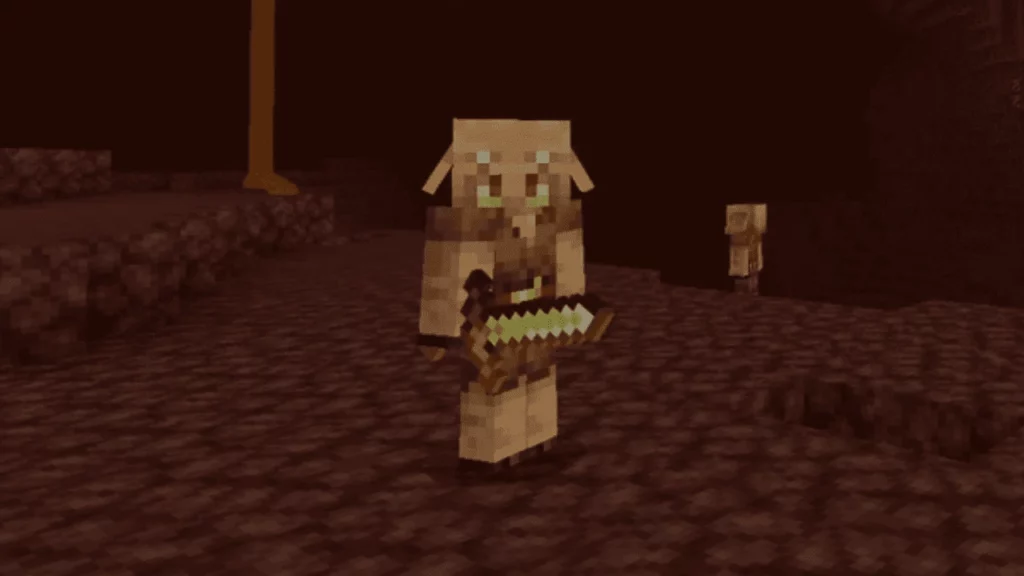
Piglins and Piglin Brutes inhabit the Nether, with the latter exclusively appearing in bastion remnants. Unlike standard Piglins, Brutes neither barter nor respond to gold distractions.
Wearing gold armor or offering gold prevents attacks from regular Piglins and enables bartering for rare materials. Piglin Brutes wield golden axes for charging attacks. When Piglins observe players holding gold items, they express jealousy through snorting.
Piglins fear zombified piglins, zoglins, and soul-based items (fire, torches, lanterns, campfires). Encountering these triggers screaming and retreat. Occasionally, up to three baby Piglins ride baby Hoglins. Mining gold within Piglin sight provokes attacks regardless of armor. Like Hoglins, Piglins outside the Nether eventually zombify.
The Pillager
Pillagers appear in wandering patrols, at outposts, or during raids, attacking with crossbow-fired arrows. Patrols emerge after 5.5 in-game days, spawning 24-48 blocks from random players on the highest solid blocks.
They continuously spawn at pillager outposts, sometimes as captains. Defeated Pillagers may drop crossbows, ominous banners, or ominous bottles. The Bad Omen effect lasts 100 minutes but disappears after drinking milk. Entering villages with this effect triggers raids.
The Ravager
These large hostile mobs exclusively spawn alongside Illagers during raids. They attack villages, wandering traders, iron golems, and players through charging and biting. Shields block their charges, briefly stunning them, but recovery triggers roaring that damages and knocks back nearby entities.
Ravagers never appear before a raid’s third wave but occasionally arrive with riders. Their deaths potentially yield saddles and experience points—offering the highest non-boss experience reward at 20 points.
The Shulker
Despite resembling harmless boxes, Shulkers hide in shells to blend with surroundings. Found in End cities, they attack using tracking projectiles that cause levitation effects. When hit by Shulker bullets, they may spawn new Shulkers of matching color.
At half health, Shulkers have a one-in-four chance to attempt teleportation without spawning duplicates. They have a 50% probability of dropping Shulker Shells upon death—the sole source of these items used for crafting Shulker Boxes.
The Silverfish
These tiny yet frustrating mobs feature small hitboxes making them difficult targets. They move rapidly and attack by biting. Silverfish infest stone and deepslate blocks in mountains, strongholds, igloo basements, and woodland mansions.
Attacking one Silverfish prompts others to emerge from nearby infested blocks. They commonly inhabit stronghold end portal rooms encountered en route to The End. Yielding only experience points, they cannot be tamed or bred, and primarily serve as nuisances. Large swarms can quickly surround careless players.
The Skeleton
Among the more common hostile mobs, Skeletons emerge at night or in dimly lit areas, using bows for ranged attacks. They avoid only mushroom fields and deep dark biomes, potentially spawning in groups of four.
Skeleton horsemen appear when skeleton horse traps trigger during thunderstorms—four skeletons riding skeleton horses, typically with enchanted bows and iron helmets. Though rare in the Nether, they inhabit soul sand biomes there.
When killed, Skeletons drop bones, arrows, equipment, and experience. Charged Creeper kills may yield skeleton skulls. They pursue players, baby turtles, and iron golems, capable of climbing stairs or ladders but burning in sunlight.
The Slime
These bouncy, cube-shaped mobs behave like Magma Cubes but jump lower and shorter distances. They spawn in deep underground areas, swamp biomes, or designated “slime chunks,” attacking through jumps.
Larger Slimes divide into smaller versions when killed, appearing in three sizes. Full moons maximize spawning while new moons prevent it entirely. Slime chunks derive from mathematical combinations of coordinates and world seeds.
Frogs killing Slimes guarantee single slimeball drops, while player kills yield 0-2 slimeballs. Experience rewards vary by size—4 for large, 2 for medium, 1 for small. Given their splitting behavior, one large Slime and its resulting smaller fragments potentially provide 28 total experience points.
The Stray
As skeleton variants, Strays inhabit snow-covered biomes like snowy plains, ice spikes, and frozen rivers. They fire slowness-tipped arrows but otherwise match skeleton behavior.
Trapping normal skeletons in powder snow creates Strays—after seven seconds of shaking and fifteen more seconds of transformation. This process restores full health regardless of the skeleton’s previous condition. Upon death, Strays potentially drop bones, arrows, slowness arrows, or equipment.
The Vex
These small, flying mobs wield iron swords and phase through walls. Summoned exclusively by Evoker spells rather than spawning naturally, three Vexes appear near casting Evokers, who can continually conjure more regardless of existing numbers.
Despite carrying swords, Vexes never drop these weapons upon death. They visually resemble Allays but appear dark gray with distinctive angry eyebrows.
The Warden
The Warden represents Minecraft’s most terrifying mob, transforming the game into a horror experience. Incredibly powerful, it emerges when sculk shriekers activate in the deep dark. Its ground-pounding attack delivers the game’s strongest melee damage, complemented by obstacle-penetrating sonic booms.
Being completely blind, Wardens rely on vibrations, smell, and touch for detection. Players can use wool or sneaking to avoid detection, or throw snowballs and fire arrows as distractions.
Wardens spawn after three sculk shrieker activations by players or mobs, eerily rising from nearby ground if no other Wardens exist within 24 blocks. They drop sculk catalysts upon death, yielding only five experience points despite their formidable challenge.
After appearing, Wardens roam randomly, following vibrations from nearby players. They can also detect motionless players by sniffing the air. Movement, smells, or vibrations increasingly anger them, and even when calm, they cast darkness on all players within 20 blocks every six seconds. Their audible heartbeat accelerates with growing anger. With health exceeding the Ender Dragon’s, Wardens prove exceptionally difficult to defeat.
The Witch
Witches utilize potions offensively via splash potions and defensively through consumption. They spawn in all biomes except mushroom fields and deep dark. Every swamp hut contains a permanent witch and cat. Some witches join raids from the third wave onward. Lightning strikes within four blocks transform villagers into witches.
Defeated witches potentially drop sticks, glass bottles, glowstone dust, redstone dust, spider eyes, gunpowder, and sugar. Killing them while drinking potions may yield healing, fire resistance, swiftness, or water-breathing potions.
The Wither
This player-constructed boss hovers airborne, firing explosive wither skulls at all living entities. As the sole Nether Star source—necessary for crafting Beacons—the Wither becomes an essential opponent for advanced gameplay.
Creating a Wither requires arranging four soul sand or soul soil blocks in a T-shape, topped with three wither skeleton skulls. Placement of the final skull triggers spawning, immediate aggression, and a large explosion.
During its health bar filling, the Wither grows and becomes temporarily invulnerable. Its spawning sound echoes across all dimensions. With 300 health points—more than the Ender Dragon but less than the Warden—it resists fire, lava, drowning, and freezing, while remaining vulnerable to Smite-enchanted weapons.
Damaged Withers destroy surrounding blocks within a 3x4x3 area, including blast-resistant materials like Obsidian. Only certain blocks remain immune to destruction: End Portals, Bedrock, End Portal Frames, End Gateways, Command Blocks, Structure Blocks, Jigsaw Blocks, Light Blocks, Moving Blocks, Moving Pistons, and Reinforced Deepslate.
When a Wither kills other mobs, it plants Wither Roses on compatible surfaces: grass, dirt, moss, mud, soul sand, soul soil, or netherrack. It passively regenerates health and instantly heals after direct kills. At half health, it gains wither armor, becoming immune to arrows and tridents.
The Wither Skeleton
Taller than standard skeletons, Wither Skeletons wield stone swords and inflict the poison-like Wither effect upon hitting targets. They exclusively spawn in Nether Fortresses, providing the only source of Wither Skeleton Skulls needed for Wither construction.
As the only renewable coal source, they support farm setups for this resource. During Halloween, they may spawn wearing carved pumpkins, though these aren’t dropped upon death. Withers spawn additional Wither Skeletons when below half health.
Though rare, Wither Skeletons can spawn riding spiders or cave spiders in the Nether, requiring player intervention since neither spider type naturally appears there. They drop bones, wither skeleton skulls, their swords, and experience points when killed.
The Zombie
Among Minecraft’s common enemies, Zombies emerge nightly across all overworld biomes except Mushroom Fields and Deep Dark. They approach slowly and attack upon sight, while Baby Zombies represent smaller, faster variants with more frequent attacks.
Nighttime village proximity can trigger “sieges” where up to 20 zombies spawn within the settlement. Zombies drop rotten flesh with potential for iron ingots, carrots, or potatoes. They actively seek turtle eggs, baby turtles, villagers, and wandering traders. Sunrise ignites and kills them. On hard difficulty, Zombies can break down doors.
Conclusion
With Minecraft’s continually expanding roster of mobs, the survival experience grows increasingly diverse and challenging. From helpful companions to formidable foes, these creatures enhance gameplay through their unique behaviors, habitats, and interactions. While this comprehensive guide covers all current mobs, future Minecraft updates will undoubtedly introduce even more fascinating entities to discover.